
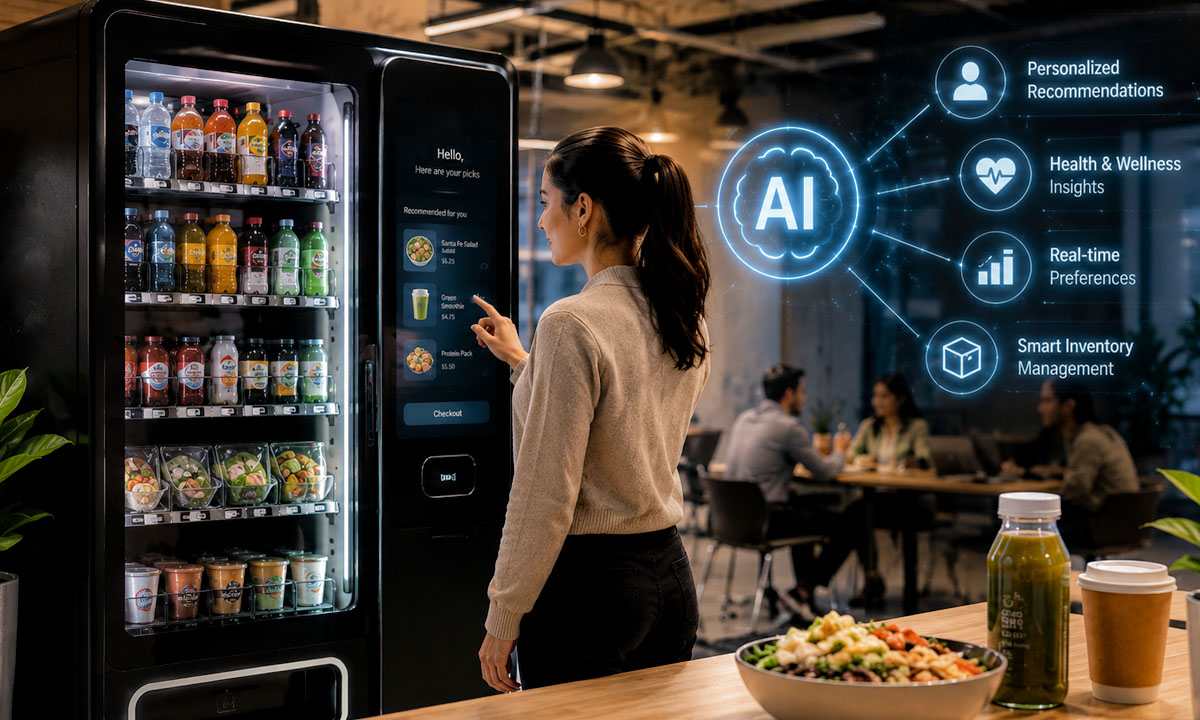
The modern workplace is becoming increasingly focused on employee experience, convenience, and personalization. Traditional breakrooms with limited food options and static inventory are no longer enough to satisfy today’s workforce expectations. Employees now expect workplace amenities that match the convenience and personalization they experience in modern retail environments.
To meet these changing expectations, businesses are adopting smart stores powered by artificial intelligence, connected inventory systems, and advanced workplace analytics. These intelligent retail environments can monitor employee preferences, optimize inventory in real time, and create more personalized food and beverage experiences.
As organizations continue modernizing workplace amenities, AI-powered smart stores are transforming how companies deliver efficient, convenient, and employee-focused breakroom services.
Why Workplace Food Preferences Are Rapidly Changing
Employee expectations around workplace food and beverage services have evolved significantly in recent years. Workers increasingly look for healthier snacks, premium beverages, flexible meal access, and convenient self-service experiences.
At the same time, organizations are placing greater emphasis on employee wellness and workplace satisfaction. This shift has encouraged businesses to move beyond traditional vending systems toward smarter and more adaptive retail solutions.
Modern employees also expect workplaces to offer personalization similar to online shopping and digital retail platforms. Businesses that fail to modernize workplace amenities may struggle to meet evolving workforce expectations.
Companies implementing AI-powered smart store solutions are creating more flexible and personalized workplace refreshment experiences that improve convenience and employee satisfaction.
How AI Helps Smart Stores Personalize Food and Beverage Services
Artificial intelligence plays a central role in helping smart stores adapt to employee preferences. AI systems analyze purchasing patterns, product popularity, inventory movement, and workplace behavior to optimize food and beverage offerings continuously.
These systems can identify trends such as preferred snack categories, popular beverages during certain times of day, and changing dietary preferences across workplace environments.
According to insights from IBM’s research on AI in retail, AI technologies help businesses improve personalization, inventory management, and customer experiences through data-driven decision-making.
AI-powered smart stores allow organizations to offer more relevant refreshment options while reducing waste and operational inefficiencies.
The Role of Behavior Tracking in Smart Store Technology
One of the most valuable capabilities of AI-powered retail systems is behavior tracking. Smart stores monitor purchasing activity and usage trends to better understand employee preferences and workplace demand patterns.
This data helps organizations optimize inventory selection and improve the overall employee experience.
Behavior tracking in smart stores helps businesses:
- Identify high-demand food and beverage products
- Understand workplace consumption patterns
- Reduce inventory shortages
- Improve product placement strategies
- Support healthier food initiatives
- Optimize breakroom inventory planning
These insights help organizations create more responsive and personalized workplace retail environments. Businesses investing in modern workplace technology systems are increasingly using AI-driven analytics to improve breakroom operations, optimize inventory management, and enhance the employee experience.
When paired with AI Smart Coolers, these insights enable real-time product tracking, automated inventory visibility, and a seamless self-service refreshment experience, helping businesses operate more efficient and data-driven breakrooms.
Smart Inventory Management Improves Workplace Efficiency
Traditional breakroom systems often struggle with inventory inaccuracies, product shortages, and excessive waste. Smart stores solve these challenges through advanced smart inventory management systems.
AI-powered inventory tools monitor stock levels continuously and automatically notify operators when products require restocking.
This level of automation improves inventory accuracy while reducing administrative workload.
Real-time inventory visibility also helps organizations maintain better product availability for employees without overstocking perishable items.
By automating inventory management processes, businesses create more efficient and reliable workplace refreshment systems.
Recommender Systems and AI-Driven Personalization
Modern smart stores increasingly use recommendation technologies similar to those found in online retail platforms and streaming services.
According to insights from Wikipedia’s explanation of recommender systems, recommendation engines use behavioral data and predictive algorithms to personalize user experiences.
In workplace retail environments, these systems can suggest products based on purchasing history, employee preferences, and workplace demand patterns.
AI-driven personalization helps businesses:
- Improve employee satisfaction
- Increase engagement with workplace amenities
- Offer more relevant refreshment choices
- Encourage healthier food selections
- Better understand employee preferences
These capabilities allow smart stores to create more dynamic and employee-centered retail experiences.
Smart Vending Solutions Are Evolving Beyond Traditional Machines
Traditional vending machines typically offer fixed product selections with limited adaptability. Modern smart vending solutions operate very differently.
AI-powered smart stores combine open retail layouts, self-checkout systems, connected coolers, and automated analytics to create more flexible workplace retail environments.
These systems continuously adapt to changing workplace preferences while improving operational efficiency.
Organizations interested in intelligent retail automation can also explore comparisons between AI smart stores and traditional vending systems to better understand how workplace retail technology is evolving.
The shift toward AI-driven smart stores reflects broader changes in workplace expectations and digital retail innovation.
How AI Supports Better Breakroom Solutions
Modern breakroom solutions are no longer limited to snacks and beverages. Businesses now view workplace refreshment systems as part of the overall employee experience strategy.
AI-powered smart stores help organizations create more engaging and convenient workplace environments through automation and personalization.
AI-enhanced breakroom benefits include:
- Faster self-service transactions
- Better product availability
- Reduced wait times during breaks
- More personalized refreshment experiences
- Improved inventory efficiency
- Better support for employee wellness initiatives
These improvements contribute positively to workplace culture, employee convenience, and operational performance.
Research Shows AI Improves Retail Personalization
Academic research continues highlighting the growing role of AI in personalized retail experiences.
According to findings published through ScienceDirect’s retail AI research, artificial intelligence technologies are significantly improving personalization, operational efficiency, and customer engagement across modern retail environments.
In workplace settings, these same technologies help businesses create smarter and more adaptive employee refreshment services.
AI-powered retail systems can respond quickly to changing employee behavior while continuously improving operational performance.
This adaptability makes smart stores especially valuable in dynamic workplace environments with changing schedules and workforce needs.
Why Smart Stores Support Employee Wellness
Employee wellness has become a major workplace priority across many industries. Businesses increasingly recognize that healthier workplace environments contribute to stronger employee engagement and satisfaction.
AI-powered smart stores help support wellness initiatives by offering more nutritious food and beverage options while tracking employee demand trends.
Organizations can also use purchasing data to identify which healthier products employees prefer most frequently.
This allows businesses to refine workplace food strategies while supporting employee wellness goals more effectively.
By combining personalization with healthier product access, smart stores create a more modern and employee-focused workplace experience.
The Future of AI-Powered Workplace Retail
The future of workplace retail will continue moving toward automation, personalization, and intelligent inventory systems.
Future smart stores may include advanced facial recognition, personalized nutrition recommendations, predictive demand forecasting, and deeper integration with workplace wellness platforms.
As AI technology evolves, workplace food and beverage services will become increasingly adaptive to employee behavior and preferences.
Businesses that invest early in intelligent workplace retail systems will be better positioned to improve employee experience while optimizing operational efficiency.
Conclusion
Modern workplaces require smarter and more personalized approaches to employee food and beverage services. Traditional breakroom systems are being replaced by intelligent retail environments powered by AI, connected inventory systems, and behavioral analytics.
Through smart stores, organizations can use smart inventory management, behavior tracking, and ai-driven personalization to improve workplace refreshment experiences while supporting operational efficiency.
As AI and workplace retail technology continue evolving, smart stores will play an increasingly important role in shaping the future of workplace convenience, employee wellness, and intelligent breakroom solutions.