Modern workplaces are changing the way employees access refreshments during the workday. Traditional breakrooms with open coolers and unrestricted food access often create congestion, inventory loss, and operational inefficiencies, especially in large offices, healthcare facilities, and manufacturing environments.
To solve these challenges, businesses are increasingly adopting controlled-access beverage coolers powered by AI and smart retail technology. These systems use digital authentication, automated tracking, and connected monitoring systems to improve workplace organization and reduce unnecessary breakroom traffic.
As organizations continue investing in automation and smarter workplace systems, controlled-access coolers are becoming an important part of efficient and secure breakroom management.
Why Traditional Breakrooms Create Operational Challenges
Traditional office breakrooms often operate without clear inventory tracking or access management. In busy workplace environments, this can lead to overcrowding, product shortages, and inefficient employee movement throughout the day.
Open-access coolers also make it difficult for businesses to monitor inventory usage accurately. Employees may remove products without proper payment or tracking, leading to inventory inconsistencies and increased operational waste.
Modern organizations are now focusing on smarter refreshment systems that improve convenience while reducing unnecessary breakroom congestion.
Businesses implementing modern workplace micro market solutions are increasingly integrating controlled-access beverage systems into self-service breakroom environments.
What Are Controlled-Access Beverage Coolers?
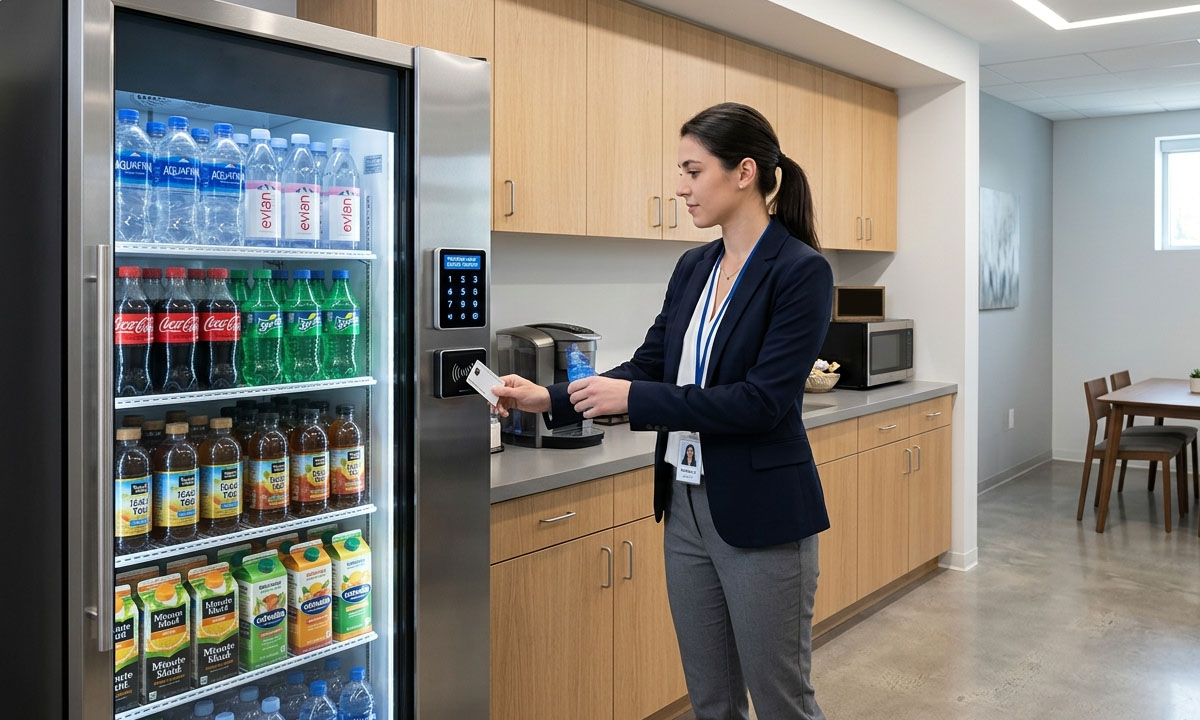
Controlled-access beverage coolers are smart refrigerated systems that require employees to authenticate access before retrieving products. Access is typically granted through mobile apps, employee credentials, digital wallets, or contactless payment systems.
Once access is approved, the cooler tracks product removal automatically using sensors, AI systems, or computer vision technology.
Unlike traditional office coolers, these systems provide businesses with greater visibility into inventory usage, employee purchasing patterns, and overall breakroom activity.
Controlled-access systems also support better workplace organization by reducing unnecessary foot traffic and improving operational flow.
How Smart Coolers Improve Workplace Efficiency
Modern smart coolers help organizations improve workplace efficiency by automating inventory tracking and simplifying employee access to refreshments.
These systems reduce the need for manual inventory checks while improving accountability and reducing unauthorized product removal.
Smart cooler benefits include:
- Automated inventory tracking
- Reduced breakroom congestion
- Faster employee access to refreshments
- Better inventory accuracy
- Improved operational visibility
- Reduced product waste and shrinkage
These operational improvements make controlled-access systems particularly valuable in large workplaces with heavy breakroom usage.
Organizations adopting smart workplace technology solutions are increasingly using AI-powered coolers to streamline employee refreshment experiences.
The Role of Digital Access Control in Modern Breakrooms
One of the most important technologies behind controlled-access coolers is digital access control. These systems verify employee access credentials before allowing interaction with the cooler.
According to insights from Wikipedia’s explanation of access control systems, access control technologies regulate entry and permissions within secure environments.
In workplace breakrooms, digital access systems help organizations:
- Monitor cooler usage in real time
- Improve accountability for purchases
- Restrict unauthorized access
- Enhance inventory security
- Reduce untracked product removal
These capabilities create more organized and manageable self-service refreshment environments.
AI Smart Coolers and Inventory Visibility
Modern ai smart coolers go beyond simple access control. They also provide intelligent inventory monitoring and analytics that help businesses improve operational planning.
AI-powered systems track product movement automatically and generate data insights related to employee purchasing behavior and product demand.
This level of inventory visibility helps organizations reduce stock shortages and optimize restocking schedules.
AI systems can also identify unusual inventory patterns that may indicate waste or unauthorized product activity.
As workplace automation continues evolving, AI-powered inventory systems are becoming essential tools for modern breakroom management.
How IoT Technology Supports Connected Coolers
Connected beverage coolers rely heavily on IoT technology to operate efficiently. Sensors, cloud platforms, and connected devices continuously communicate with one another to provide real-time operational visibility.
According to insights from TechTarget’s explanation of IoT systems, the Internet of Things allows physical devices to exchange data and automate operational processes.
In controlled-access coolers, IoT technology supports:
- Real-time inventory monitoring
- Automated maintenance alerts
- Remote cooler diagnostics
- Usage tracking and analytics
- Smart energy management
These features help organizations improve operational efficiency while reducing manual management requirements.
Why Breakroom Traffic Management Matters
In busy workplaces, uncontrolled breakroom traffic can create operational disruptions. Employees may spend excessive time waiting in crowded refreshment areas, especially during lunch breaks or shift changes.
Controlled-access beverage coolers help distribute employee traffic more efficiently by streamlining transactions and reducing unnecessary interactions.
Self-service technology also minimizes the need for traditional staffed refreshment counters, allowing employees to access products more quickly and independently.
This improved efficiency contributes to better workplace flow and reduced interruptions during busy workdays.
The Growth of Cashless and Touchless Refreshment Systems
Cashless technology is now a major part of modern workplace retail systems. Controlled-access coolers frequently integrate with mobile wallets, digital credentials, and contactless payment systems.
According to insights from Investopedia’s explanation of digital wallets, digital payment technologies simplify transactions while improving convenience and payment security.
Benefits of cashless cooler systems include:
- Faster payment processing
- Reduced physical contact during transactions
- Improved payment accuracy
- Easier employee access to refreshments
- Simplified financial reporting
- Better compatibility with mobile payment systems
These advantages help create more seamless and efficient workplace breakroom experiences.
Controlled-Access Coolers Support Modern Workplace Expectations
Employee expectations continue evolving as workplaces become more technology-driven and convenience-focused.
Workers increasingly value refreshment systems that are fast, reliable, and easy to use. Smart beverage coolers help organizations meet these expectations while improving operational oversight.
Businesses exploring modern workplace automation can also learn more through AI-powered self-serve breakroom solutions that combine intelligent coolers with unattended retail technology.
By modernizing breakroom experiences, organizations can improve both employee satisfaction and workplace efficiency.
The Future of Smart Beverage Coolers
The future of workplace refreshment systems will continue moving toward automation, AI integration, and predictive analytics.
Future smart coolers may include personalized recommendations, advanced facial recognition authentication, AI-driven restocking systems, and deeper integration with workplace wellness initiatives.
As businesses continue prioritizing convenience and operational efficiency, controlled-access beverage coolers will become increasingly common across offices, hospitals, manufacturing facilities, and corporate campuses.
These systems represent a major step toward smarter and more organized workplace refreshment environments.
Conclusion
Modern workplaces require smarter breakroom systems that balance convenience, operational visibility, and employee experience. Traditional open-access refreshment areas often create congestion, inventory loss, and unnecessary operational inefficiencies.
Controlled-access beverage coolers help organizations improve workplace efficiency through automated tracking, AI-powered monitoring, and secure digital access control systems.
By combining smart coolers, IoT connectivity, and cashless payment technology, businesses can reduce unattended breakroom traffic while creating more efficient and modern employee refreshment experiences.
As workplace automation continues evolving, controlled-access beverage systems will play an increasingly important role in the future of smart workplace operations.