
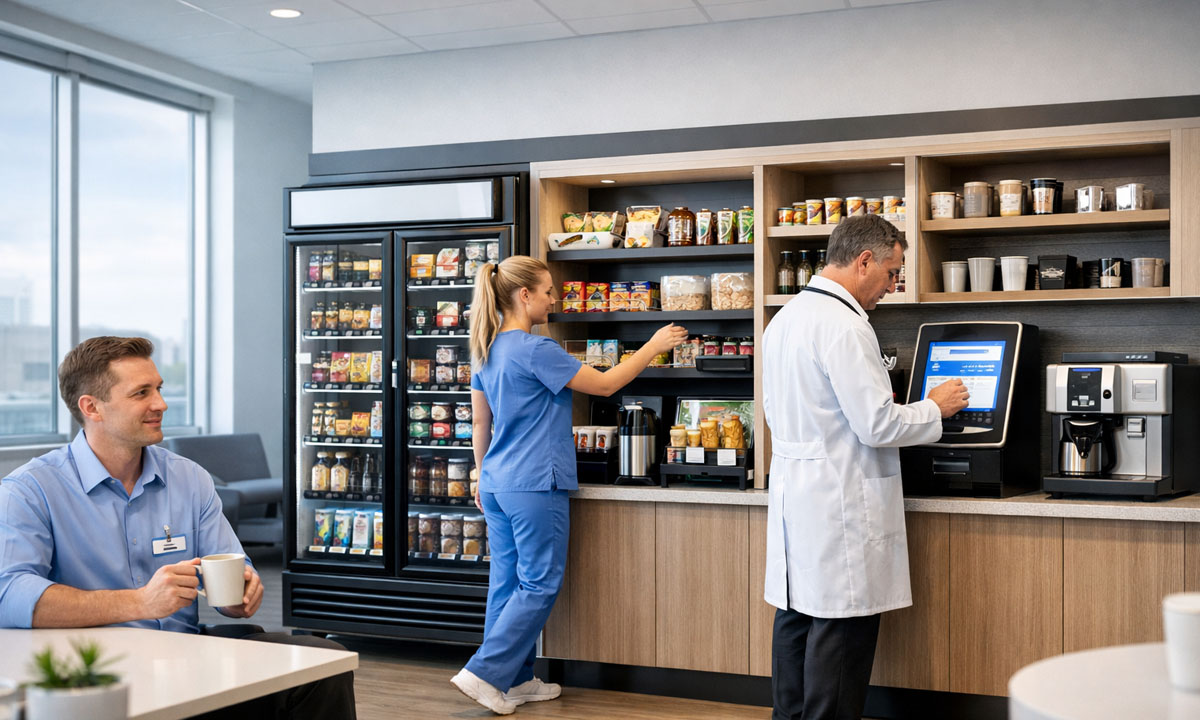
Healthcare environments operate under constant pressure. Hospitals run around the clock, employees work long shifts, and staff members often have limited time for breaks. In these demanding conditions, properly managed employee refreshment spaces are more important than many organizations realize.
Modern hospitals are now investing in smarter breakroom solutions that improve convenience, hygiene, and operational efficiency. Traditional breakrooms with manual inventory tracking and limited refreshment options are gradually being replaced by automated pantry systems powered by smart technology.
These systems help hospitals streamline pantry management, improve inventory visibility, and create more efficient staff support environments. By combining automation, smart vending, and contactless systems, hospitals can better support healthcare workers while improving operational consistency.
As healthcare facilities continue modernizing workplace infrastructure, automated pantry systems are becoming a valuable part of hospital operations.
Why Hospital Breakrooms Require Smarter Solutions
Hospital environments differ significantly from traditional office spaces. Employees work rotating schedules, overnight shifts, and extended hours that create constant demand for refreshments throughout the day.
Traditional breakroom systems often struggle to keep up with this demand. Manual restocking, inconsistent inventory tracking, and limited product availability can quickly create frustration for hospital staff.
Modern breakroom solutions solve these issues by introducing automation and real-time monitoring into hospital refreshment systems.
Hospitals implementing professional pantry service solutions can maintain better inventory consistency while ensuring employees have reliable access to snacks, beverages, and meals during busy shifts.
The Role of Automated Pantry Systems in Hospitals
Automated pantry systems use technology-driven tools to simplify inventory tracking, replenishment, and refreshment management. These systems reduce the need for manual oversight while improving operational accuracy.
Unlike traditional breakrooms, automated systems continuously monitor product movement and inventory levels in real time.
Key features of automated hospital pantry systems include:
- Real-time inventory tracking and monitoring
- Automated restocking notifications
- Smart vending machine integration
- Contactless payment and access systems
- Centralized inventory reporting dashboards
- Reduced waste through smarter inventory planning
These systems allow hospitals to maintain efficient refreshment operations without increasing administrative workload.
Pantry Management Becomes More Efficient With Automation
One of the biggest operational challenges in hospital breakrooms is inventory inconsistency. Without proper monitoring, products may run out unexpectedly or expire before being used.
Modern pantry management systems solve this problem by tracking inventory automatically and generating replenishment alerts when stock levels become low.
This creates a more organized and efficient refreshment environment for healthcare employees.
According to insights from Wikipedia’s explanation of inventory control, inventory management systems help organizations maintain accurate stock levels while reducing waste and operational inefficiencies.
For hospitals managing high-volume staff activity, this level of automation significantly improves operational reliability.
Contactless Technology Improves Hygiene Standards
Healthcare facilities place strong emphasis on cleanliness and infection prevention. This is one reason why contactless technology has become increasingly important in hospital breakrooms.
Modern pantry systems now include touchless dispensing systems, mobile payment integration, and sensor-based access controls that minimize unnecessary physical contact.
These technologies support better hygiene practices while improving convenience for hospital employees.
Touchless systems also help hospitals align refreshment operations with broader workplace health and safety protocols.
As healthcare environments continue modernizing, contactless refreshment technology is expected to become standard across many hospital facilities.
Smart Vending Machines Support 24/7 Hospital Operations
Hospitals operate continuously, which means employees require access to refreshments at all hours. Traditional cafeterias may not always remain open overnight, making automated systems especially valuable.
Smart vending machines allow hospitals to provide reliable access to beverages, snacks, and meals without requiring full-time staffing.
These machines use advanced tracking systems, automated monitoring, and digital payment technologies to improve efficiency.
Healthcare organizations integrating smart workplace technology solutions can better manage hospital breakrooms while reducing operational complexity.
Modern vending systems also provide data insights that help hospitals optimize product selection and reduce inventory waste.
Inventory Automation Helps Reduce Waste
Hospitals consume large quantities of refreshments daily, making waste reduction an important operational priority.
Without proper monitoring, overstocking and expired products can quickly increase unnecessary costs.
Inventory automation helps hospitals by:
- Improving inventory accuracy in real time
- Reducing over-ordering of low-demand products
- Preventing stock shortages during peak usage
- Identifying product consumption trends
- Supporting faster replenishment decisions
- Reducing waste from expired inventory
These advantages help healthcare facilities maintain more sustainable and cost-efficient refreshment operations.
Supply Chain Visibility and Hospital Operations
Efficient supply management is critical in healthcare environments. Hospital pantry systems now operate similarly to broader operational supply chains that depend on visibility and automation.
According to insights from Investopedia’s explanation of supply chain management, effective supply systems improve operational coordination, efficiency, and resource allocation.
Automated pantry systems apply these same principles to workplace refreshments by ensuring products remain available while minimizing waste and inefficiency.
This approach helps hospitals create more reliable employee support systems without placing additional strain on facility management teams.
How IoT Technology Powers Automated Pantry Systems
Modern automated pantry systems rely heavily on connected technologies and cloud-based monitoring systems.
The Internet of Things, commonly known as IoT, allows devices to communicate and exchange information in real time. According to insights from TechTarget’s explanation of IoT technology</b></a>, IoT systems connect physical devices through sensors and digital networks to improve automation and operational visibility.
In hospital breakrooms, IoT technology supports:
- Smart inventory monitoring
- Automated maintenance alerts
- Real-time vending machine diagnostics
- Usage tracking and reporting
- Energy-efficient equipment management
These connected systems help hospitals improve both operational efficiency and employee convenience.
Employee Wellness and Hospital Breakroom Design
Healthcare professionals often work under stressful conditions, making employee wellness an important organizational priority.
Well-designed breakrooms provide staff with spaces to recharge, hydrate, and maintain energy throughout demanding shifts.
Hospitals can further support workplace wellness by integrating modern pantry systems with employee wellness-focused pantry services that prioritize healthier food and beverage options.
Providing reliable access to refreshments also improves employee satisfaction and overall workplace morale.
The Future of Automated Breakroom Solutions in Healthcare
As hospitals continue modernizing operations, automated pantry systems will become even more advanced and data-driven.
Future innovations may include AI-powered inventory forecasting, personalized food recommendations, and fully autonomous retail-style hospital breakrooms.
Healthcare organizations are increasingly recognizing that efficient employee support systems contribute directly to workplace satisfaction and operational performance.
This shift will continue driving investment in automated refreshment technologies across healthcare environments.
Conclusion
Modern hospitals require smarter, more efficient workplace refreshment systems that can support employees around the clock. Traditional breakroom setups often struggle to meet the operational demands of healthcare environments.
By adopting automated breakroom solutions, hospitals can improve inventory accuracy, reduce waste, and provide more reliable access to refreshments for staff members.
Technologies such as smart vending machines, inventory automation, and contactless technology are transforming how hospitals manage employee breakrooms while improving workplace efficiency and hygiene standards.
As healthcare facilities continue embracing automation and smart workplace systems, automated pantry solutions will play an increasingly important role in supporting both operational efficiency and employee well-being.