
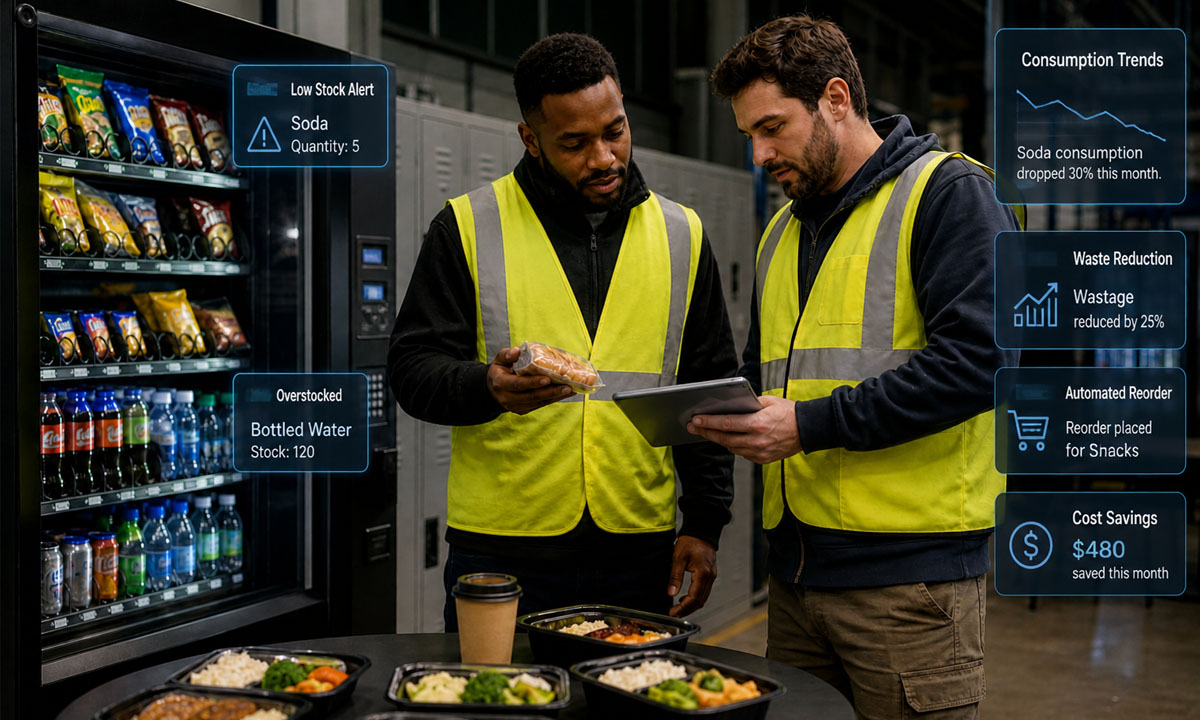
Workplace refreshment setups look simple on the surface. Stock some drinks, keep snacks available, and refill when needed. But in reality, most organizations struggle with inefficiencies they do not immediately notice. Stockouts, overordering, hidden waste, and inconsistent tracking all quietly impact cost and employee satisfaction.
This is where food and beverage inventory management becomes essential. Instead of relying on manual checks or guesswork, modern businesses are turning to automated systems that provide real-time visibility, accuracy, and control over workplace refreshments.
A structured beverage inventory system does more than track items. It connects consumption patterns, reduces waste, and ensures employees always have access to what they need.
Why Workplace Refreshments Often Fail Without Proper Inventory Control
Many companies invest in workplace refreshment solutions but overlook the operational backbone that keeps them efficient. Without structured tracking, even well-stocked breakrooms can become inconsistent and wasteful.
Most problems occur not because of lack of supply, but because of lack of visibility. When teams do not know what is being consumed, how quickly items are used, or when restocking is needed, inefficiencies build up quickly.
To understand the fundamentals behind structured tracking, you can explore this explanation of inventory management principles, which form the foundation of modern systems.
Common Hidden Gaps in Workplace Beverage Management
These are the most frequent issues companies face when they lack food and beverage inventory management systems:
- Frequent stockouts of popular drinks and snacks
- Over-purchasing items that go unused or expire
- No real-time visibility into consumption patterns
- Manual tracking errors and inaccurate reporting
- Uncontrolled waste due to poor rotation of stock
- Delayed restocking decisions causing employee dissatisfaction
These gaps directly impact cost efficiency and employee experience. A structured system eliminates guesswork and replaces it with data-driven decision-making.
What a Beverage Inventory System Actually Does
A modern beverage inventory system is designed to automate tracking, reporting, and replenishment processes. Instead of relying on manual counts, it uses real-time data to monitor stock levels continuously.
This transforms how businesses manage their office inventory management processes by creating a transparent and predictable supply chain for workplace refreshments.
How Automated Inventory Management Solves Workplace Inefficiencies
Modern businesses are shifting toward automated inventory management because manual systems simply cannot keep up with real-time demand. Automation ensures accuracy, reduces workload, and improves overall operational efficiency.
Key Benefits of Automated Systems
- Real-time tracking of beverage and snack consumption
- Automatic alerts when stock levels fall below thresholds
- Reduced manual errors in counting and reporting
- Better forecasting of future demand patterns
- Improved coordination between procurement and usage
- Lower waste due to optimized ordering cycles
These improvements directly strengthen food and beverage inventory management and make workplace refreshment systems more reliable and cost-effective.
Why Workplace Refreshment Solutions Need Smarter Tracking
Modern workplace refreshment solutions are no longer just about providing snacks and drinks. They are about delivering consistent availability, minimizing waste, and ensuring employee satisfaction.
Without structured systems, even premium refreshment setups can become inefficient. Automated tracking ensures that every item is accounted for and replenished at the right time.
Role of Technology in Modern Beverage Inventory Systems
Technology is the backbone of modern inventory control. Cloud platforms, sensors, and AI-driven analytics have completely transformed how businesses manage refreshments.
These systems integrate with broader workplace ecosystems to provide centralized control and visibility. For example, companies can connect their refreshment tracking with workplace technology systems to streamline operations.
This level of integration ensures that inventory decisions are based on real-time data rather than assumptions.
Smart Stores and Inventory Optimization
Smart retail environments such as office breakrooms and micro markets rely heavily on accurate inventory tracking. Without it, even the most advanced setups lose efficiency.
By combining smart retail systems with structured tracking, businesses can eliminate waste and improve service reliability.
Learn how integrated environments work through smart store solutions, which connect inventory, payments, and analytics into a single system.
How Automated Alerts Prevent Stock Problems
One of the most valuable features of modern systems is automated notification. Instead of discovering shortages after they happen, businesses receive real-time alerts.
These systems are often part of broader solutions like automated inventory alert systems, which help organizations maintain optimal stock levels without manual intervention.
Key Advantages of Alert Systems
- Immediate notification of low stock levels
- Prevention of sudden product shortages
- Reduced emergency ordering costs
- Improved planning for restocking cycles
- Better alignment between supply and demand
These features significantly improve office inventory management efficiency.
Business Impact of Better Inventory Control
Implementing a structured food and beverage inventory management system has a direct impact on business performance. It reduces operational waste, improves cost control, and enhances employee satisfaction.
For example, hydration plays a key role in employee performance. Studies show that even mild dehydration can impact focus and productivity. You can explore this further through this research on workplace hydration benefits.
When employees consistently find available refreshments, it improves workplace morale. At the same time, businesses benefit from reduced waste and more accurate forecasting.
Over time, this leads to smarter budgeting and more efficient resource allocation.
Future of Workplace Beverage Management
The future of beverage inventory system technology is driven by automation, AI, and predictive analytics. Businesses will move toward fully autonomous systems that manage inventory without human intervention.
Expected trends include:
- AI-powered demand forecasting for refreshments
- Fully automated restocking systems
- Integration with employee behavior analytics
- Smart sensors for real-time consumption tracking
- Zero-waste workplace refreshment models
As organizations continue to adopt digital transformation strategies, automated inventory management will become a standard part of workplace operations.
Conclusion
The hidden inefficiencies in workplace refreshment systems often go unnoticed until they start affecting costs and employee satisfaction. Implementing a structured food and beverage inventory management system solves these issues by improving visibility, accuracy, and control.
From reducing waste to ensuring consistent availability, a modern beverage inventory system transforms how businesses manage office refreshments. By leveraging automation, analytics, and smart tracking, companies can build more efficient and employee-friendly environments.
As workplaces evolve, investing in intelligent inventory systems is no longer optional. It is a strategic move toward sustainability, efficiency, and long-term operational success.