
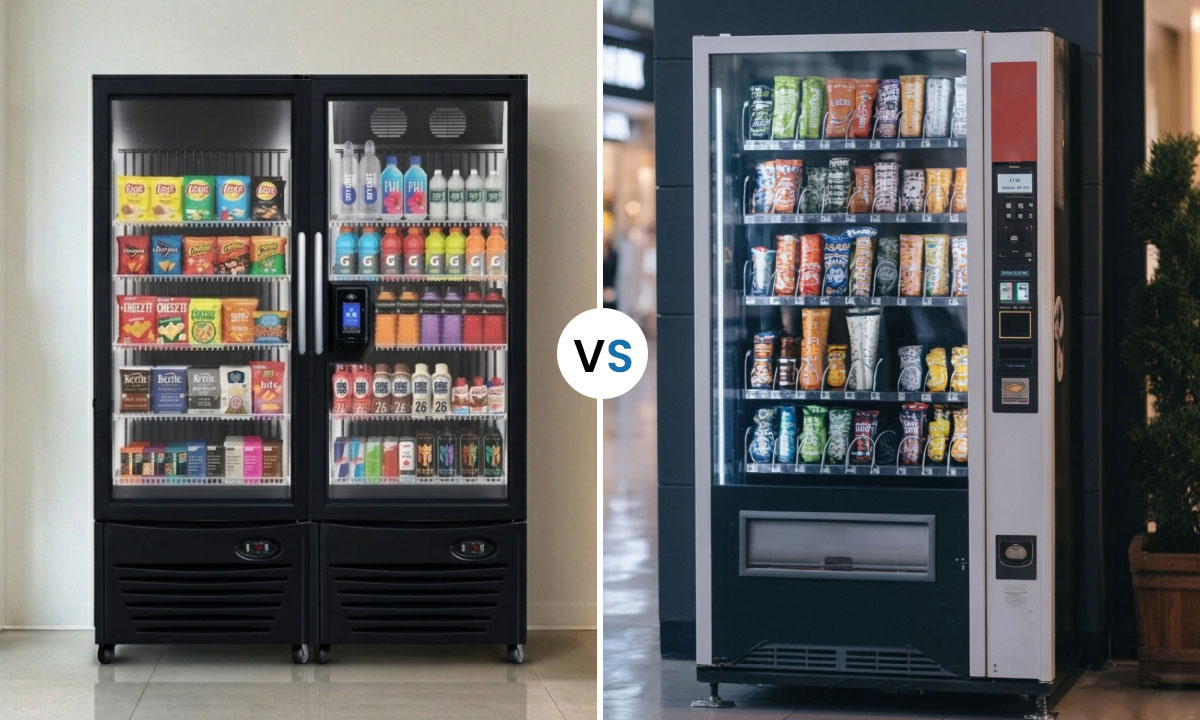
As workplaces evolve toward automation and convenience, businesses are rethinking how they provide food, beverages, and everyday essentials to employees. The comparison between AI smart store vs vending machines has become increasingly relevant as companies seek more efficient, scalable, and user-friendly solutions.
While traditional vending machines have served workplaces for decades, modern AI-powered retail automation is redefining expectations. From real-time inventory tracking to frictionless checkout, smart stores offer a more advanced alternative to conventional vending systems.
Understanding the differences between these two solutions helps businesses choose the right approach for their workplace needs, employee satisfaction, and long-term operational efficiency.
What Is an AI Smart Store?
An AI smart store is a self-service retail space that uses artificial intelligence, sensors, and cloud-based systems to allow users to select products and complete purchases without traditional checkout processes. These stores rely on automation to track items, monitor inventory, and process payments seamlessly.
Unlike vending machines, smart stores provide a wider variety of products, including fresh meals, snacks, beverages, and even health-focused options. They are part of a broader shift toward automated retail vs vending, where technology replaces manual processes with intelligent systems.
For businesses exploring advanced workplace solutions, integrating smart retail technology with office infrastructure is becoming a key trend. Learn more about how this works through modern workplace technology solutions.
What Are Traditional Vending Machines?
Traditional vending machines are standalone units that dispense snacks, beverages, or other products after a user inserts cash or uses a payment method. They are simple, reliable, and widely used across offices, schools, and public spaces.
While vending machines have evolved to include digital payments and improved interfaces, their core functionality remains limited compared to smart stores. They typically offer a smaller product range and rely on manual restocking and maintenance.
Key Differences Between AI Smart Store and Vending Machines
1. Product Variety and Accessibility
AI smart stores offer a wide selection of products, including fresh food, beverages, and specialty items. Employees can browse and pick multiple items without restrictions.
In contrast, vending machines are limited by physical slots and capacity. This restricts product variety and often leads to fewer choices for users.
2. User Experience
Smart stores provide a seamless, retail-like experience with open shelves and frictionless checkout. Users simply pick items and leave, with payments processed automatically.
Vending machines require users to select items through buttons or screens, which can sometimes lead to delays or errors.
3. Inventory Management
AI smart stores use real-time tracking and predictive analytics to monitor inventory levels. This ensures products are always available and reduces waste.
Traditional vending machines rely on manual checks and restocking schedules, which can lead to stockouts or expired items.
4. Payment and Checkout Systems
Smart stores use advanced automated retail systems, including mobile apps, card payments, and AI-based billing.
Vending machines typically support basic cashless payments but still rely on user interaction for each purchase.
5. Space and Scalability
Smart stores require more space but offer scalability and flexibility in layout and product offerings.
Vending machines are compact and easy to install, making them suitable for smaller spaces with limited demand.
Smart Store Benefits for Modern Workplaces
- Provides a retail-like experience with open access to products
- Supports healthier food options and diverse inventory
- Uses AI for real-time tracking and demand forecasting
- Enhances employee satisfaction and workplace engagement
- Reduces shrinkage through automated monitoring systems
These smart store benefits make them ideal for companies focused on innovation, employee wellness, and operational efficiency.
Advantages of Traditional Vending Machines
- Low initial investment compared to smart stores
- Easy installation with minimal space requirements
- Suitable for small offices or low-traffic areas
- Simple operation with minimal training required
- Reliable and widely understood by users
Despite their limitations, vending machines remain a practical solution for businesses with basic refreshment needs.
When to Choose Smart Vending vs Traditional Vending
The choice between smart vending vs traditional vending depends on business goals, workforce size, and operational priorities. Industry insights also highlight how businesses are choosing between smart and intelligent vending systems based on their specific needs.
Smart stores are ideal for:
- Large offices and corporate campuses
- Companies focused on employee experience and wellness
- Businesses seeking automation and data-driven insights
Vending machines are better suited for:
- Small offices with limited space
- Budget-conscious setups
- Locations with lower employee or customer traffic
Hybrid models are also becoming more common, combining vending machines with micro-market or smart store concepts for greater flexibility.
The Role of AI in Modern Retail Automation
AI is the driving force behind smart store innovation. It enables:
- Automated product recognition
- Real-time inventory tracking
- Personalized recommendations
- Predictive maintenance and restocking
To understand how AI-powered vending systems work, explore this resource on AI vending technology from NEUROSHOP.
Future of Automated Retail in Workplaces
The future of workplace retail is shifting toward fully automated, AI-driven solutions. Smart stores are expected to become more common as businesses prioritize convenience, efficiency, and employee satisfaction.
Key trends include:
- Expansion of unattended retail environments
- Integration with workplace apps and systems
- Increased focus on health and wellness products
- Adoption of IoT and AI for smarter operations
For a deeper look into how automation is shaping office environments, read our blog on smart stores in office operations.
Conclusion
The comparison between AI smart store vs vending machines highlights a clear shift toward automation and enhanced user experience. While traditional vending machines remain a practical solution for smaller setups, smart stores offer a more advanced, scalable, and engaging alternative.
Businesses must evaluate their needs, budget, and employee expectations when choosing between these options. For organizations aiming to create a modern, efficient, and employee-focused workplace, investing in AI-powered smart stores is a forward-thinking decision.
At the same time, vending machines continue to serve as reliable solutions for simpler environments, making them a valuable part of the overall workplace refreshment strategy.