
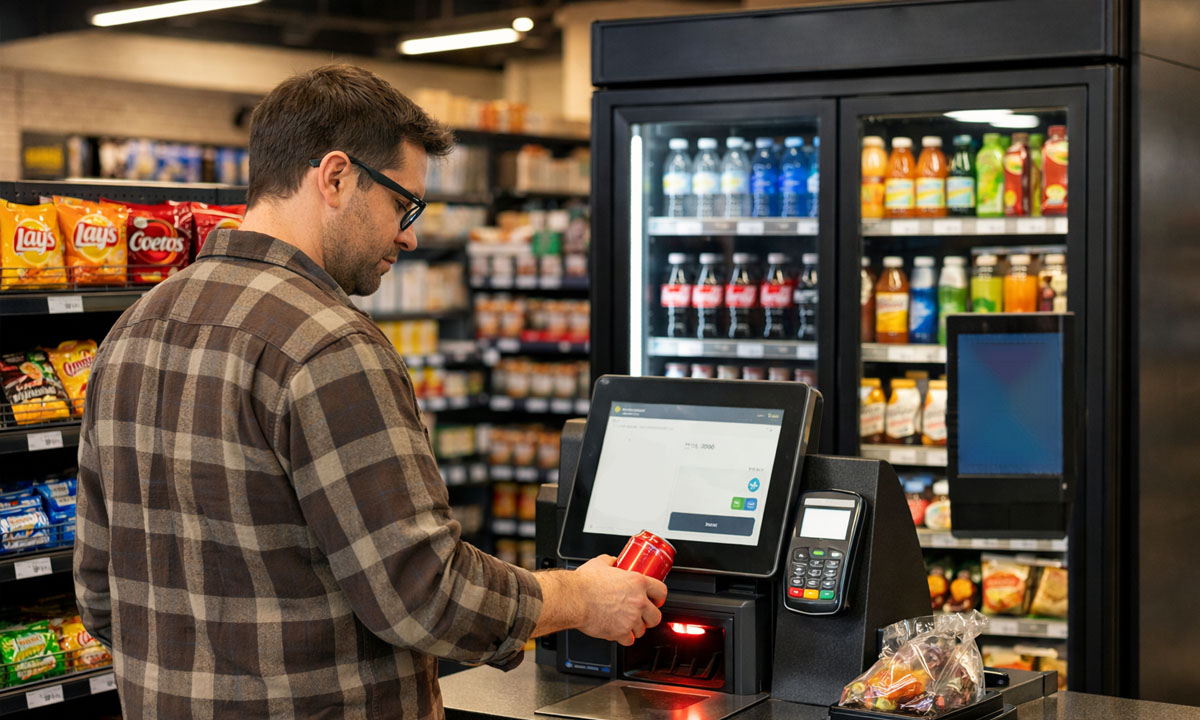
Workplace retail is evolving at a rapid pace. Traditional vending machines and staffed cafeterias are no longer sufficient to meet the needs of modern employees. Today, workers expect seamless access to snacks, meals, and beverages without delays, long lines, or cash handling. Companies seeking to enhance employee satisfaction while reducing operational overhead are increasingly turning to smart stores, AI-driven analytics, and frictionless checkout systems to revolutionize the workplace retail experience.
These technologies combine autonomous retail environments, intelligent inventory management, and automated payment solutions to provide an efficient, scalable, and employee-focused approach to workplace refreshment. The result is a workplace that is not only more convenient but also more data-driven, cost-effective, and future-ready.
Smart Stores in Modern Workplaces
Smart stores are the backbone of modern workplace retail. Unlike traditional vending machines, smart stores use open shelving, AI-powered cameras, digital checkout systems, and cloud-based analytics to create a fully autonomous retail environment.
Employees can browse products freely, pick what they want, and complete their purchases with minimal friction. Every transaction is tracked digitally, which allows for real-time inventory monitoring and reduces the chances of stockouts or spoilage.
Businesses are adopting smart retail solutions to provide employees with 24/7 access to snacks, meals, beverages, and pantry essentials. This ensures that staff working flexible schedules or late shifts have the same access as daytime employees.
For example, a multi-building corporate campus implemented a smart store system with AI inventory tracking. Within the first three months, they noted a 30% reduction in product waste and a 15% increase in employee satisfaction related to breakroom services. These stores also mirror the concept of automated convenience stores, operating independently without full-time staff while maintaining a retail experience similar to small urban convenience outlets.
How AI is Changing Workplace Retail
Artificial intelligence is transforming the way workplace retail operates. AI enables:
- Predictive inventory management based on real-time consumption trends
- Optimized restocking schedules to reduce waste
- Real-time analytics for operational efficiency
- Theft prevention and shrinkage reduction
- Personalized product recommendations for employees
With AI, managers no longer rely on manual tracking or guesswork. For instance, the system can detect which snacks sell fastest during afternoon breaks and automatically adjust stock levels. This improves inventory accuracy and ensures that popular items are always available.
AI also allows companies to analyze purchasing behavior across multiple workplace locations. These insights help optimize product offerings, promotional strategies, and staffing requirements. This aligns with broader trends in unattended retail systems, often referred to as Smartstore retail systems, where automation, data analytics, and operational intelligence combine to create efficient retail environments.
Frictionless Checkout Technology Explained
Frictionless checkout is one of the most visible innovations in workplace retail. Employees can complete purchases without interacting with a cashier. Key features include:
- Contactless payment using badges or mobile wallets
- Self-scanning of items using AI-enabled kiosks
- Real-time transaction verification and automated receipts
- Fast and seamless checkout for multiple items
These systems are an evolution of self-checkout technology but are enhanced for workplace efficiency with AI monitoring and fraud prevention mechanisms.
The benefits of frictionless checkout go beyond speed. They reduce employee downtime, improve operational efficiency, and minimize human error in transaction recording. In high-volume workplaces, this reduces congestion during peak breaks, ensuring a smooth flow of employees in and out of the retail space.
Micro Markets: The Gateway to Smart Retail
Many organizations begin their retail transformation by implementing micro markets. Micro markets offer:
- Open shelving for easy access
- Expanded product variety beyond traditional vending
- Healthy meals, beverages, and snack options
- Self-checkout kiosks for convenience
When paired with AI and frictionless checkout, micro markets act as the first step toward fully autonomous smart stores. Companies can start with a single micro market, analyze purchasing trends, and scale their setup based on data-driven insights.
For workplaces upgrading their breakroom infrastructure, micro market solutions are often the entry point. Employees benefit from variety and convenience, while companies benefit from operational efficiency and lower staffing costs.
For operational strategies and real-world implementation, you can refer to the role of smart stores in streamlining office operations.
Benefits of Smart Stores and AI Integration
24/7 Accessibility
Employees on all shifts gain uninterrupted access to food and beverages.
Operational Cost Reduction
No full-time cafeteria staff is required while maintaining high-quality retail service.
Enhanced Inventory Accuracy
AI-driven systems monitor consumption, reducing stockouts and product spoilage.
Data-Driven Decision Making
Real-time analytics allows managers to optimize product selection and understand employee preferences.
Improved Employee Experience
Modern retail technology demonstrates a forward-thinking workplace, improving morale and retention.
Healthier Options and Sustainability
Smart stores often include fresh and healthy snacks, reducing reliance on processed foods. Predictive restocking reduces food waste, supporting sustainability goals.
Workflow of a Smart Store
A typical workflow in a smart store involves:
- Stocking & Setup: Products are placed on shelves equipped with weight sensors and RFID tags.
- Employee Access: Staff enter using badges, mobile apps, or biometric verification.
- Selection: Items are picked freely from shelves while AI cameras track selections.
- Frictionless Checkout: Payment is processed automatically, without human interaction.
- Inventory Update: The system updates stock levels in real time and flags low-stock items for restocking.
- Analytics & Reporting: Managers receive detailed reports on sales, trends, and inventory needs.
This seamless workflow demonstrates how AI and automation combine to reduce downtime, improve accuracy, and provide a superior employee experience.
Future Trends in Workplace Retail
The future will bring further innovation:
- Dynamic Pricing AI: Prices can adjust based on inventory levels and demand.
- Biometric Checkout: Facial recognition for instant, secure transactions.
- Predictive Restocking: AI forecasts consumption patterns to ensure optimal stock.
- Personalized Recommendations: Employees receive suggestions based on past purchases.
- Integrated Workplace Apps: Employees can pre-order items, receive notifications, or track inventory from mobile devices.
These trends indicate that workplace retail is evolving into a fully autonomous, data-driven ecosystem, aligned with employee expectations and operational efficiency.
Case Study Example
A large corporate campus implemented a smart store with AI-driven inventory management and frictionless checkout. Within six months:
- Staffing costs for the cafeteria decreased by 40%
- Inventory turnover improved by 25%
- Employee satisfaction regarding workplace food amenities rose by 15%
This illustrates how smart stores, AI, and automated payment solutions provide tangible benefits in efficiency, waste reduction, and employee engagement.
Final Thoughts
The future of workplace retail is powered by smart stores, AI-driven analytics, and frictionless checkout technology. Implementing these technologies allows companies to:
- Reduce operational costs
- Improve inventory accuracy
- Enhance employee satisfaction
- Increase workplace productivity
- Support sustainability goals
From micro markets to fully autonomous smart stores, organizations embracing smart retail solutions today will lead in efficiency, employee experience, and innovation.