
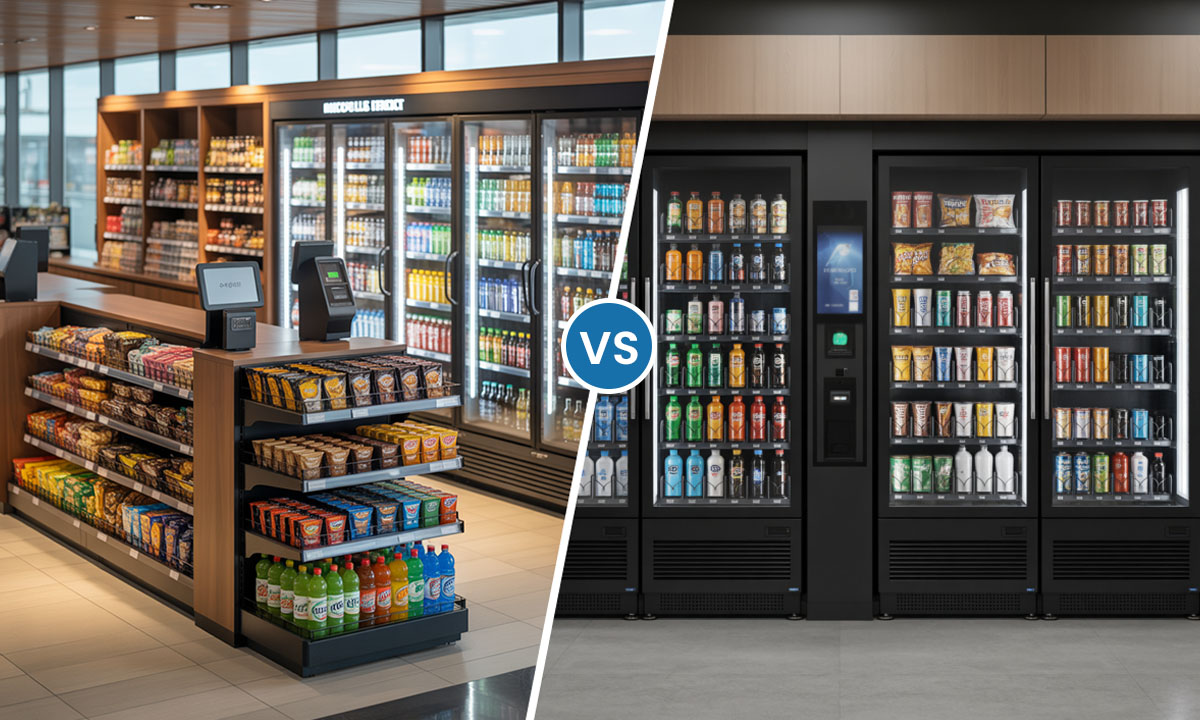
Office managers in Memphis are increasingly responsible for improving workplace experiences while keeping daily operations efficient. One area that often gets underestimated is the breakroom. What used to be a row of vending machines has now become a space that can influence productivity, morale, and time management throughout the workday.
As employee expectations continue to rise and work schedules become more flexible, many offices are shifting toward unattended retail solutions. Two options dominate this space today: smart stores and micro markets. Although they serve similar purposes, the way they operate and the problems they solve are very different.
This guide explains those differences clearly, helping Memphis office managers choose the option that best fits their workplace rather than following trends blindly.
Why Breakroom Decisions Matter in Modern Workplaces
Breakrooms quietly affect how employees experience their day. When access to food and beverages is convenient and reliable, employees spend less time leaving the building and more time focused on work.
Workplace research consistently shows that employee experience directly impacts performance. According to Gallup’s employee engagement meta-analysis, organizations that invest in better workplace experiences see higher productivity and stronger retention over time.
For Memphis businesses operating extended hours, mixed shifts, or hybrid teams, a reliable breakroom is no longer a perk. It is part of running an efficient operation.
What Is a Micro Market?
A micro market is an open, self-service retail space installed directly inside the workplace. Employees browse open shelves and coolers, select items, and complete their purchase at a self-checkout kiosk.
This setup feels familiar and intuitive, similar to a small convenience store. Employees can see all available options at once, compare products, and choose at their own pace. Micro markets tend to perform well in professional office environments where trust levels are high and foot traffic is predictable.
For offices evaluating this option, it helps to understand how layouts, shelving, and product mixes are typically structured in real workplaces, such as those outlined here: micro market breakroom setups.
How Smart Stores Work
Smart stores are a more advanced form of unattended retail. Instead of using a traditional checkout kiosk, employees enter an enclosed space using a badge or mobile credential, take the items they want, and leave. The system automatically tracks what was taken and processes payment in the background.
This model prioritizes speed, accountability, and security. Because access is controlled, smart stores are especially effective in environments with rotating staff, large teams, or overnight operations.
Automation is increasingly shaping how people interact with everyday systems at work. Harvard Business Review explains how automation is changing daily work environments, making frictionless experiences more accepted across many industries.
To better understand how this model functions in office and operational settings, reviewing examples of smart store breakroom solutions can clarify whether this approach aligns with workplace needs.
Smart Stores vs. Micro Markets: Key Differences
Security and Loss Control
Security is often the deciding factor between these two options.
Micro markets rely on open access and employee trust. In many office environments, shrinkage remains low. However, in workplaces with high turnover, large hourly teams, or public access, losses can become more noticeable.
Smart stores reduce this risk by controlling entry and tracking transactions automatically. Each visit is tied to a specific user, which increases accountability without requiring supervision.
For Memphis facilities operating 24/7 or managing large operational teams, this distinction can significantly impact long-term costs.
Speed and Daily Convenience
Micro markets require employees to scan items and complete checkout at a kiosk. While the process is simple, it can create small delays during peak break times.
Smart stores remove that step entirely. Employees enter, grab what they need, and leave.
Retail research from McKinsey on the future of retail operations highlights frictionless checkout as a major efficiency driver, particularly in controlled environments like offices and industrial facilities.
Space and Layout Planning
Micro markets are flexible and can often be installed within existing breakrooms. Their open design makes the space feel accessible and welcoming.
Smart stores require a defined, enclosed area. While this involves more planning, it also allows better control of traffic flow and access.
Office managers should think beyond square footage and consider how employees move through the space during busy periods.
Product Variety and Engagement
Both solutions support snacks, beverages, and fresh food options.
Micro markets excel at visual merchandising. Employees can see all available items at once, which encourages variety and repeat use.
Smart stores rely more on data-driven stocking. Inventory decisions are based on actual usage patterns, helping reduce waste and keep popular items available.
Industry insights from the National Association of Convenience Stores on workplace food trends show increasing demand for fresh and convenient food access at work, reinforcing the value of both formats when managed correctly.
Cost Considerations for Memphis Offices
The true cost of a breakroom solution includes more than installation. Shrinkage, restocking efficiency, downtime, and employee usage all influence return on investment.
Micro markets typically offer faster deployment and simpler maintenance. Smart stores often provide stronger cost control in environments where accountability and security are priorities.
Choosing the right option depends on how employees behave day to day, not on which solution appears more advanced.
How Breakroom Choice Affects Daily Operations
Breakrooms shape workflow in subtle ways.
Micro markets create a relaxed environment where employees can browse and take short mental breaks, supporting informal interaction and morale.
Smart stores emphasize speed and availability, which is especially valuable for employees with limited break times.
Understanding this operational impact can help managers align breakroom strategy with business goals, as discussed in this analysis on how smart retail concepts streamline office operations.
Choosing the Right Solution for Your Workplace
To decide between a smart store and a micro market, office managers should ask practical questions:
- Do employees work fixed hours or rotating shifts?
- Is loss prevention a concern?
- Do employees value speed or browsing more?
- How much space is realistically available?
Smart stores often perform best in high-traffic, security-focused environments. Micro markets are well suited for offices that prioritize flexibility and engagement.
Some Memphis organizations even use different solutions across locations based on workforce behavior.
Final Thoughts
Smart stores and micro markets both deliver strong results when matched correctly to workplace needs. The most successful offices are those that choose based on how people actually work, not on trends or assumptions.
For Memphis office managers, the goal is simple: reduce daily friction, support employees consistently, and keep operations running smoothly. When the breakroom aligns with real-world behavior, productivity and satisfaction follow naturally.